Access. Structure. Control.
About Foundation New York
Institutional Manhattan real estate for perpetual capital - large enough to command institutional capital, connected enough to win what capital cannot reach alone.
The eternal benchmark, reinvented.

Why Foundation New York exists
The biggest names in the business cannot do what is done here, and the reason is arithmetic. Blackstone manages more than $600 billion in real estate. Brookfield roughly $900 billion. Starwood, KKR, and The Carlyle Group have each raised billions more.
That scale wins large, standardized transactions and rules out everything else: the $60-to-$150-million recapitalizations, the fractured partnerships, the distressed-debt positions, and the landmark conversions that have produced Manhattan’s best risk-adjusted returns for a generation.
Blackstone built its first fortune on exactly those deals and is now too large to touch them. The gap none of these platforms fills is the precise gap Foundation New York was built to occupy: large enough to command institutional capital, connected and nimble enough to win the deals that capital cannot reach on its own.
What we do
To acquire, recapitalize, reposition, and control institutional-quality Manhattan real estate through off-market ownership transitions, capital-structure complexity, and regulatory opportunity - creating value through structure, execution, and zoning capability rather than open-market competition.
The platform is already inside the conversations that matter. Qualification discussions are active with pension funds, sovereign-linked capital, private-banking platforms, and family offices across Israel, Europe, Switzerland, and the United States.
Why this is the moment to be inside New York
Four forces have converged at once. Together they have produced the most compelling concentration of asymmetric entry points in decades.
-
01
Office dislocation
The office narrative is uniformly negative - and that negativity has produced pricing in specific categories that reflects the story rather than the long-term reality of well-located Manhattan real estate.
-
02
Debt-maturity wave
The capital-structure environment is producing the most significant wave of forced recapitalization, maturity stress, and ownership transition the city has seen in decades.
-
03
Conversion-friendly regulation
A regulatory climate that finally rewards sophisticated use conversion and repositioning - where process depth becomes the competitive edge.
-
04
Land-use overhaul
The largest overhaul of the city’s land-use framework in a generation - zoning capability as a primary source of basis and control.

Every asset entered through complexity. Value created through execution.
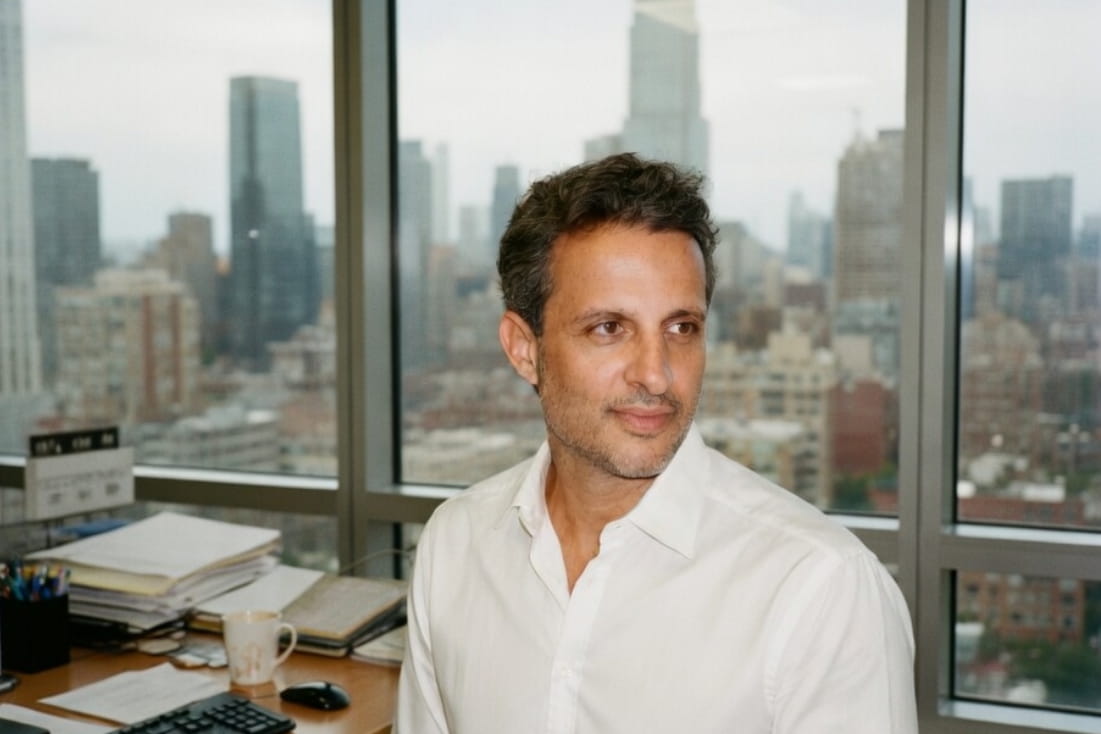
Richard Ohebshalom
Chief Executive Officer
Richard Ohebshalom built and operated a significant Manhattan real estate platform across multiple full market cycles. Every asset was entered through complexity and value was created through execution.
He navigated the full New York City Landmarks Preservation Commission process delivering a Michelin-recognized hospitality destination through the complete landmark restoration and redevelopment of 250 Fifth Avenue. He originated, acquired, and developed 8 Carlisle Street through the full entitlement and development process before structuring the joint venture with Grubb Properties, who is now completing one of the most significant residential towers in Lower Manhattan.
His experience operating in Israel through active conflict periods directly informs Foundation Ukraine’s risk framework, resilience requirements, and execution discipline. He currently holds active institutional mandates across New York, Israel, and Ukraine.
The path to a publicly traded platform
A portfolio of four to six institutional-quality assets in strategic Manhattan corridors produces a platform with gross asset value well in excess of $2 billion at stabilization. As the market normalizes and institutional capital re-engages, a publicly traded Foundation New York trades at a premium to the net asset value of what it owns.
The IPO is not the exit. It is the beginning of the next deployment cycle.

Specific institutional-scale assets in strategic Manhattan corridors - where ownership transitions, capital-structure stress, and repositioning requirements have created entry points unavailable through any marketed process - are under active discussion.
All material information resides in the confidential data room following qualification and execution of a mutual non-disclosure agreement.
The pipeline is real. The basis is right. The conversations are active.
- Richard Ohebshalom, Chief Executive Officer