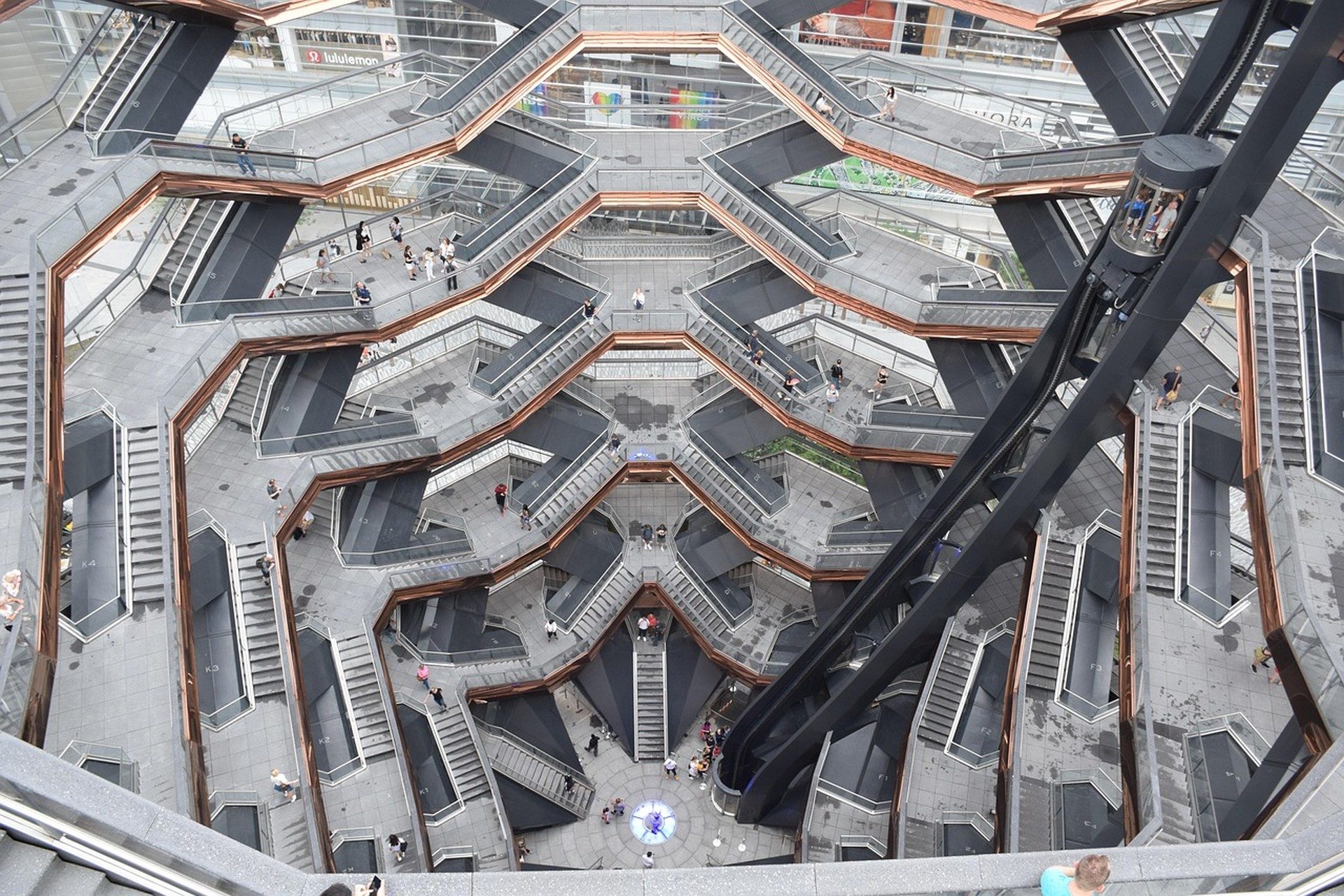
Hudson Yards has redrawn the skyline west of Midtown and forced New Yorkers to rethink what mixed-use districts can deliver. The phrase Hudson Yards office residential trends captures the interlocking pressure points of leasing activity, condo absorption, rental velocity, and amenity competition that now define this finite stretch of Manhattan. Ordinary households and mid-size employers alike track the same signals because both live and work under the same towers.
Twin Markets That Refuse to Move in Lockstep
Office floors and residential floors sit stacked on the same platforms yet respond to different clocks. Corporate decision makers extend or abandon leases according to headcount plans and hybrid policies, while households chase delivery dates for kitchens and views of the High Line. That separation produces periods when one asset class trades at a premium while the other sits idle. Observing the gap between those two curves is the fastest way for a non-expert to grasp the true pulse of Hudson Yards office residential trends.
Savvy readers keep three simple scorecards. Available Class A tower blocks measure how thirsty employers remain for concentrated desks. Monthly signed leases for one- and two-bedroom homes reveal whether new construction is landing product at prices families accept. Finally, the gap between asking and achieved rents or sale prices shows whether sellers still hold pricing power. When any of those three numbers shifts sharply, neighbors two blocks away feel the aftershock in school enrollments or lunch-rush denseness.
Where Lease Concessions Still Hide in Plain Sight
Even after years of marketing, certain office stacks continue to offer free fit-out allowances and several months of free rent. Those packages rarely appear in published reports; they surface only in unsigned term sheets and broker gossip. Residential buildings that opened during pandemic construction pauses sometimes carry higher overhang and therefore discount retention rates or transfer tax contributions more aggressively than towers that sold out early. Knowing which stack still needs soft guidance protects both tenants and buyers from overpaying simply because a skyline photo looked impressive.
Data housed by the HUD User research portal helps frame these discounts against national multifamily benchmarks. Local observers pair those figures with city-level permits and certificates of occupancy so the anomalies become easier to spot. The result is clearer negotiations instead of racing the headline asking rents that marketing packages promote.
Transit Pulse That Pulls Workers and Residents Northwest
The 7 train extension and the pedestrian network south of 34th Street turn Hudson Yards into a viable daily loop for people who once considered the Far West Side too remote. Street-level retail and cultural anchors keep evening foot traffic higher than pure business districts manage, which in turn stabilizes residential parking demand and delivery logistics. Commuters who can reverse their trips toward Long Island or New Jersey gain an automatic edge, and that edge leaks into weekend footfall around public plazas.
Anyone weighing an apartment purchase can now look at seven-day hop-on counts instead of rush-hour peaks alone. The denser calendar of cultural programming also means more people walk past lobby concierges after dark, a quiet security premium that newer towers advertise only in private tours. For broader context on commuting corridors that compete for the same workers, the companion piece on The Outer Borough Growth Corridor: Emerging Trends and Data maps how reverse flows redistribute pressure across borough bridges.
Capital Streams That Underwrite Glass and Steel
Equity for both office repositioning and residual condo inventory often arrives via private vehicles that already hold exposure in technology or life-science sectors. Those capital pools compare Hudson Yards metrics against Midtown’s older inventory and against facilities near hospitals. The same managers sometimes reallocate residual cash into overseas corridors, a pattern examined at length in the overview Connecting New York Capital to Tel Aviv and Kyiv Corridor Execution. Understanding that overlap explains why certain buildings close fundraising rounds faster than property income alone would justify.
Currency strength and interest-rate trajectories still dominate those decisions. Surveys released by the IMF publications archive place current United States yield curves inside global funding contexts, giving local general partners a ready yardstick. When those macro sheets shift, capital already earmarked for Hudson Yards residences can quietly reprice sale plans or lengthen lease-up calendars for adjacent office space.
Pipeline Inventory versus Ready-to-Occupy Stock
Several full floors remain under construction even while neighboring towers host furniture and full staff. That timing mismatch produces pockets of temporary oversupply that freelancers or expanding tech teams can use for short-term expansion without long-term commitments. Residential buyers, by contrast, usually prefer finished keys; they watch completion percentages and escrow release schedules rather than steel-frame percentages. Stacking those two delivery calendars side by side lets households judge whether neighboring construction will continue noise or dust for another year.
Neighborhood committees already debate infrastructure capacity, and the official site maintained by the City of New York posts the latest environmental review updates. Reading those memos alongside hard-hat forecasts removes surprises about school seats, wastewater lines, or open-space phasing. Residents and employers both stand to benefit once primary infrastructure catches the last wave of openings.
How Contiguous Submarkets Steal or Share Demand
Tenants who balk at Hudson Yards asking rates often slide south or east by only a few blocks, testing whether Long Island City inventory or Chelsea renovations deliver similar amenities at lower all-in costs. Residential households perform a parallel calculation and occasionally choose aquatically lit towers across the East River instead. Tracking that leakage shows up first in subway entrances south of the twin railways rather than on broker open houses. The detailed evolution of one frequent alternative destination appears in Long Island City: New York's Fastest-Evolving Real Estate Submarket.
Comparisons also keep profit margins honest. Landlords watch whether neighboring districts release large blocks of equipped offices; those releases can freeze net effective rents until absorption catches the spillover. Prospective residents apply the same comparative filter to monthly carrying costs once condo boards set common charges for the second year of operations.
Debt Walls Approaching Office Floors First
Office buildings financed at lower rates face refinancing tests within the next cycle while many residential condominiums already stand free of construction loans. That staggered calendar can freeze grand renovations if lenders demand new appraisals or cash re-equitization. Households watching for unit upgrades or plaza improvements should note those refinance windows because amenity programs often pause while ownership groups restructure debt. Readers seeking deeper analysis of the broader island can turn next to Manhattan Real Estate in 2026: Office Dislocation and the Debt Maturity Wave.
Local credit conditions remain well mapped by the Federal Reserve Bank of New York through its regional surveys. Those reports supply the only public early warning of commercial real-estate stress spilling into consumer savings or hiring decisions nearby. Matching those readings against residential deposit trends prevents anxiety over temporary cranes or darkened floors.
Brooklyn Pathways That Compete for Residual Capital
Some equity allocators treat residual Hudson Yards risk as a swap into recent Brooklyn launches once prices stabilize. Strategy outlines for that rotation already circulate among private family offices and appear in A Smart Strategy Playbook for Brooklyn's Emerging Neighborhoods. Households with roots in both places therefore confront evolving choices between high-rise pier views and brownstone rents two stops farther out. Residential product that fails to close in Hudson Yards may ultimately reappear as mid-rise rentals south of Atlantic Avenue after ownership groups restructure.
Official data tables and weekly columns covering every one of these moving parts live inside the New York Real Estate Market Trends archive. Casual visitors start there before opening individual trade PDFs. Newcomers who still need terminology walkthroughs or owner eligibility rules can open the FAQ (frequently asked questions) page. Additional local case studies and interview transcripts appear throughout the main Blog collection for readers who prefer narrative over tables.
Taken together, these indicators paint Hudson Yards not as a finished experiment but as a living ledger of rents, leases, subway counts, and funding cycles. Each fresh delivery, renewal, or refinance recalibrates what both office tenants and residential owners can expect for the next three to five years.
Related Foundation reading: Track record and Foundation Israel.
Timeless Value. Perpetual Legacy.