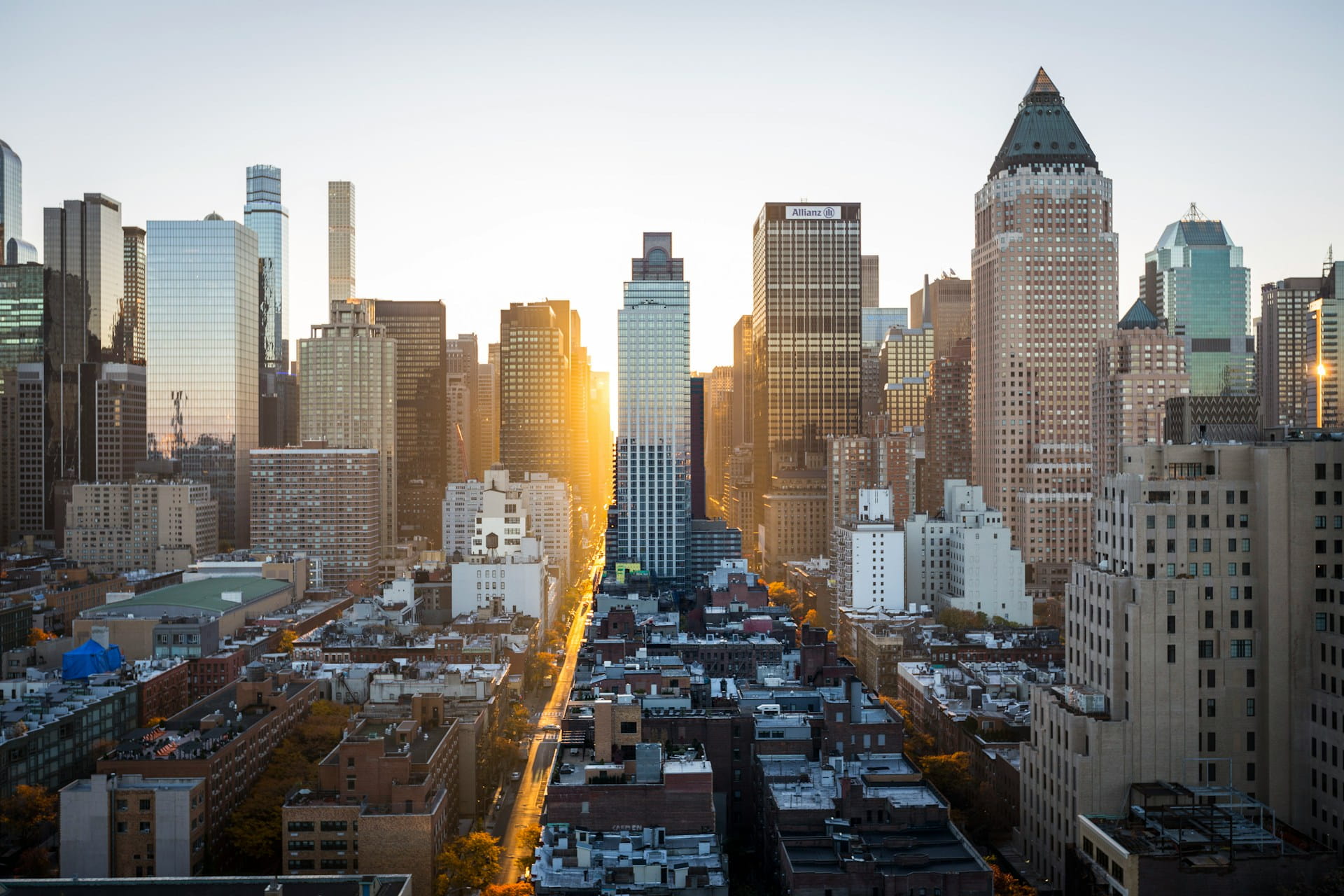
New York’s data centers run around the clock, and every rack of servers draws steady electricity that once came almost entirely from fossil fuels. Operators now face rising pressure to shift that load onto renewable energy sources while keeping uptime flawless. The phrase renewable energy data centers NYC captures a practical challenge rather than a slogan: how to match intermittent clean generation with continuous digital demand inside one of the world’s densest power markets.
Power Appetite of New York Server Halls
Modern compute halls in the metro area can consume as much electricity as small towns. High-density racks packed with graphics processors for artificial intelligence push those numbers higher still. Facility managers track megawatts the way landlords track square footage because every extra watt multiplies both cost and carbon exposure. Understanding who leases those halls helps explain the scale of the shift; see Understanding the Tenant Profile Behind New York's Data Center Boom for the mix of cloud providers, financial firms, and content platforms driving demand.
Growth projections from the Federal Reserve Bank of New York show commercial electricity use climbing faster in tech-heavy corridors than in the broader economy. That trend forces operators to look beyond traditional utility contracts and toward dedicated renewable supply.
Upstate Wind and Hydro Feeding Downstate Racks
Much of New York’s clean generation sits far from Manhattan and Long Island. Wind turbines along the Great Lakes and large hydro plants on the Niagara and St. Lawrence rivers produce surplus power that can travel south if transmission capacity exists. Data center developers increasingly negotiate long-term offtake agreements that reserve those electrons for their campuses. The physical path those electrons take still depends on congested lines and substation upgrades, issues examined in The Grid Interconnection Queue Slowing New York Data Center Projects.
Seasonal patterns matter. Spring runoff boosts hydro output while summer heat waves spike both air-conditioning loads and data-center cooling demand. Operators therefore blend multiple renewable sources and firm them with storage or flexible natural-gas peakers that run only when needed.
Corporate Renewable Contracts in the Data Center Market
Large tenants rarely wait for the local utility to green the grid on its own schedule. Instead they sign virtual power-purchase agreements that fund new wind or solar farms and deliver renewable energy certificates to their New York sites. These contracts appear on financial statements and must meet disclosure rules overseen by the US Securities and Exchange Commission. Public companies treat the certificates as proof that their compute load is matched with clean generation even when the electrons themselves flow elsewhere on the grid.
Smaller colocation providers follow a similar path by buying community solar subscriptions or joining aggregated buyer groups. Both approaches raise the total volume of renewable energy data centers NYC can claim without every operator building its own generation.
On-Site Generation and Storage Options for Operators
Roof space on industrial buildings is limited, yet some New York campuses now host solar canopies over parking lots and modest battery banks that smooth short-term dips. Behind-the-meter systems let a facility ride through brief renewable shortfalls without drawing from the public grid. Land availability remains a hard constraint; the trade-offs appear in detail under Land Requirements for Data Center Development in the New York Region.
Battery chemistry choices focus on duration and safety. Lithium-ion packs cover minutes to a few hours, enough to bridge cloud cover or wind lulls while diesel generators stay cold. Operators test these systems under real load so that renewable integration never compromises the five-nines reliability tenants demand.
Cooling Innovations That Pair With Variable Renewables
Servers produce heat continuously, and traditional chillers are themselves large electricity users. Free-cooling designs that pull outside air during mild weather cut that parasitic load, freeing capacity for the compute floor. Liquid-cooling loops that touch the chips directly raise the temperature of waste heat high enough for reuse in nearby buildings, turning a data center into a thermal exporter.
When renewable supply drops, operators can throttle non-critical workloads or shift them to other regions for a few hours. That flexibility turns data centers into grid assets rather than rigid consumers, a role that will grow as more variable generation comes online.
Policy Signals and Market Incentives Across the State
New York’s climate law sets aggressive carbon-reduction targets that utilities and large customers must meet. Incentive programs rebate battery installations and award points for siting renewable projects near load centers. Housing and community-development research from HUD User research also tracks how energy-intensive facilities affect neighborhood power quality and local tax bases, reminding developers that social license matters as much as engineering.
Monetary policy from the US Federal Reserve influences the cost of capital for long-lived renewable assets. Lower interest rates make multi-decade power-purchase agreements more attractive, while tighter credit slows speculative builds. Data-center investors therefore watch both energy policy and broader economic signals.
Connectivity, Location, and Clean-Power Synergies
Fiber routes and substation access still dominate site selection, yet renewable availability is joining the checklist. Campuses that sit near existing clean-generation corridors or have spare land for storage gain an edge. Readers exploring network factors can review Fiber Backbone Connectivity as a Site Selection Factor for NYC Data Centers. Meanwhile artificial-intelligence growth continues to redraw preferred corridors; the spatial shift is mapped in AI Infrastructure Demand Is Reshaping New York's Real Estate Map.
Operators who combine strong connectivity with verifiable renewable supply attract tenants whose own sustainability pledges require green compute. That dual advantage is becoming a market differentiator rather than a nice-to-have feature.
Where Operators Turn for Ongoing Insight
Practical questions about permitting, metering, and certificate tracking arise daily. Foundation maintains an Infrastructure Technology archive that collects deeper analyses of power, land, and network topics. New pieces appear regularly on the Blog, and common queries receive concise answers in the FAQ (frequently asked questions). Together these resources help non-experts follow the rapid evolution of renewable energy data centers NYC without needing an engineering degree.
The path forward is neither purely technological nor purely political. It is a series of contracts, hardware choices, and location decisions that slowly replace carbon-heavy megawatts with cleaner ones. Every facility that locks in long-term renewable supply lowers the carbon intensity of the digital services New Yorkers use every day.
Readers comparing notes on Renewable Energy Integration in New York s Data Center in New York should keep one dated source list and one named owner for updates so the next review of Renewable Energy Integration in New York s Data Center does not restart definitions. Article reference newyork-085.
If two teams disagree about Renewable Energy Integration in New York s Data Center, write the disagreement in one paragraph with the evidence each side trusts before any money language expands around Renewable Energy Integration in New York s Data Center. Article reference newyork-085.
A short refusal note for Renewable Energy Integration in New York s Data Center should say what was parked, why it was parked, and who can reopen the file on Renewable Energy Integration in New York s Data Center after new facts arrive in New York. Article reference newyork-085.
Related Foundation reading: Team and Foundation World New York hub.
Timeless Value. Perpetual Legacy.